Gen Z has given us many things: Middle parts, comfortable clothes over designer brands, and plenty of viral recipes. The newest trend of 2026 is a little more serious, and it's catching the attention of millennials. Living a “soft life” started as a label on social media, and has now grown into an entire lifestyle. The concept seems simple: Prioritize self-care, reject hustle culture, and lean into slower days. But is this attainable and, more importantly, sustainable?
We spoke with HJ Cho, a Licensed Clinical Social Worker in NJ with 15+ years of experience, to find out. At her practice, Therapy for Overthinkers, she focuses on everything from grief to inherited baggage. As a result, she's seen plenty of trends come and go, and explains why this one feels different.
“Soft Life” Days On Social Media Vs. In Real Life

©PeopleImages/Shutterstock.com
Every now and then, the warnings resurface that you can't believe everything you see on social media. Images are edited, reels only show five minutes out of 24, and struggles have no place in stories. This content evokes something we all strive to achieve: Comfort. Cho says this is the point, and it's why the “soft life” era is so highly desired.
“The visual aspect of how a soft life is curated online is meant to invoke an emotional reaction. It stirs up a wistfulness around capturing a perfect moment that reflects simplicity and contentment. Real life is a lot less quiet and not as quite photogenic,” she says.
“When we look back at candid pictures, our memories recall a number of details, from sensory information to emotional states. We remember when things were forced or posed, versus being captured just at the right moment. And because we know things can be captured at the right moment, a part of us hopes that the posed moments we see online could be reality, that maybe it's something we could attain, if we just tried harder.”
Cho adds that the “soft life” is an incomplete picture. “Moments are entirely possible, and aspects of a soft life are attainable! But you forfeit your humanity if that's the only presentation you want to experience and showcase.”
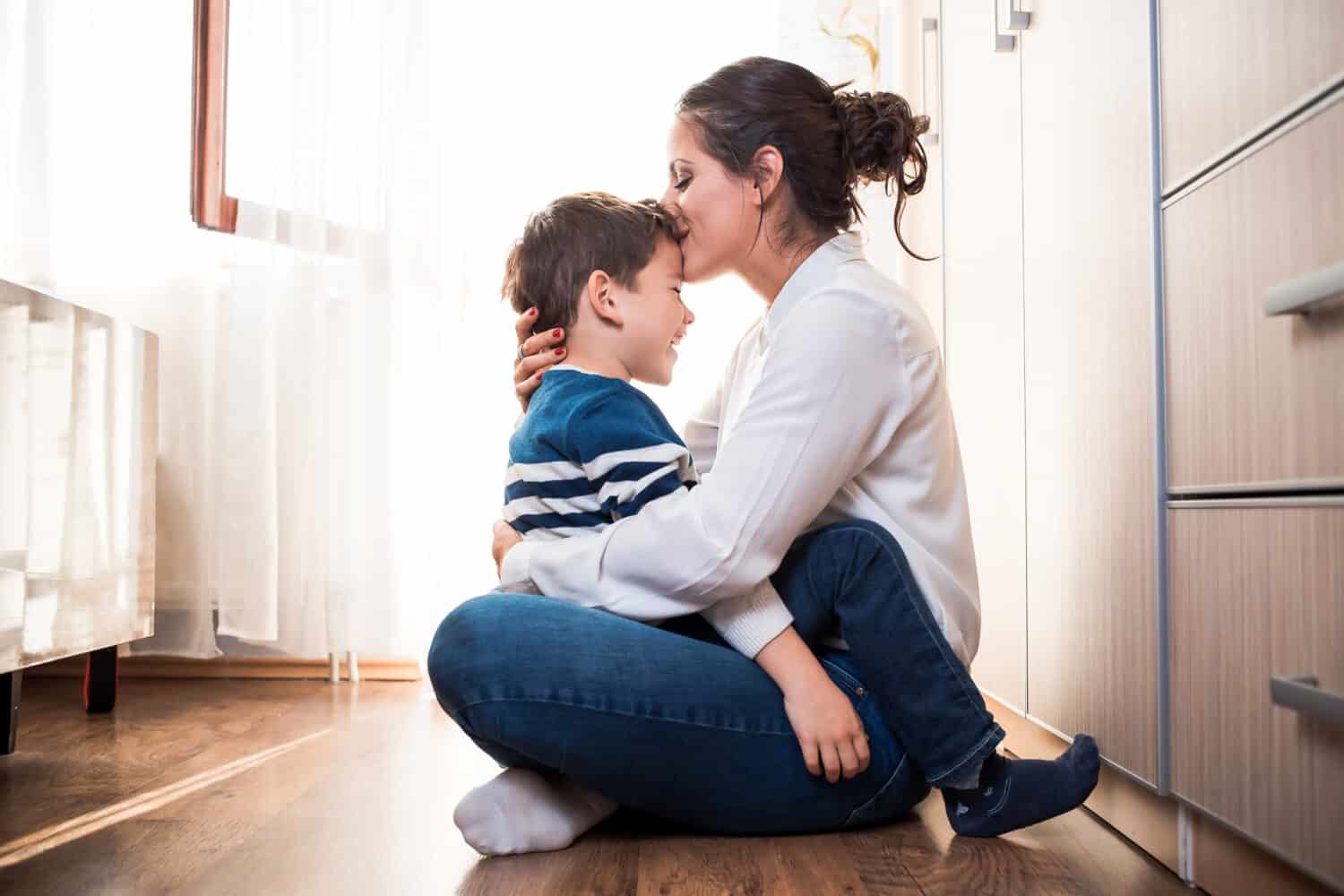
Living Softly Starts With Parents
“The piece that a lot of folks gloss over is that this soft life concept has to be about the adults as much as it is about the children. It requires parents to be regulated well enough where generational traumas aren't being passed along as inheritance,” Cho says.
If parents don't implement this in their own lives first, it becomes challenging to raise their children the same way. For most, that looks like simply being gentle with and showing grace to one another.

©maradon 333/Shutterstock.com
“We've all heard ‘do as I say, not as I do, ‘ and all know that ‘lesson' doesn't go very far. Abstract concepts, like emotional regulation, are learned through witnessing, through experiencing, through having it modeled for them,” she explains. “You also can't successfully model something you haven't practiced yourself! To want a soft life with children in the picture, adults have to enter said picture with something genuinely soft to offer.” In real life, Cho says that might look like:
- Learning to recognize what actually restores you, versus what everyone says should be restorative (i.e., the “self” in “self-care”).
- Unlearning beliefs such as “rest should be earned” or “asking for help is a sign of weakness.”
- Deciding to work on the way you talk to yourself, because you realize you parrot a lot of outdated expectations.
- Creating and enforcing boundaries in relationships so you don't burn out and, as a result, burn the relationship.
Realistic “Soft Life” Living Is Possible
Not everything will be as easy, simple, or feel-good as it is on social media. That's life: It's messy, unpredictable, and fluid. However, Cho says there are some realistic ways to incorporate what we see on social media into our own lives.
“Lower stress environments may not always be possible to engineer, but lower stress responses are completely doable. One of the most basic but effective ways to incorporate these qualities is to notice how you're speaking to yourself and your kids, especially when things are chaotic,” she encourages. “Emotionally validating yourself and your kid takes mere moments, but changes the trajectory of escalation. Saying ‘That must be so frustrating' instead of ‘stop crying' is soft life parenting in a single sentence.”
Soft Life: Pros, Cons, and Truths
Fostering emotional connections and creating a calm, soothing, safe space are key benefits of “soft lives.” For kids, this atmosphere extends even further, encouraging them to be their most authentic selves.
“Kids thrive when the adults in their lives keep showing up, for the good days and the rough days,” Cho says. “No need for perfect parenting, but regulated parenting. Parents who indulge in self-care ultimately have more capacity, which is the difference between surviving the day versus actually being present throughout the day, and kids notice this, too.”

©KAMPUS/Shutterstock.com
And as with everything else, there are some things to consider in “soft life” parenting, too. “Softer or gentle parenting gets lumped in with permissive parenting, and they're very different things,” Cho stresses. “Consequences absolutely still matter, but the distinction is made between the delivery and intention. Kids raised in a softer environment still need structure and accountability, but those things don't have shame or fear attached to them. The con isn't necessarily the approach itself, but the misapplication if the softness looks to avoid discomfort rather than discern a more thoughtful way to move through it.”
“We do know that hustle culture as we currently know it has led to burnout, anxiety, struggles with rest, and issues with boundaries. It'll be interesting to see the work ethics of those raised to value intentionality over results.
HJ Cho, Licensed Clinical Social Worker and Owner of Therapy for Overthinkers
As a trend, it'll likely fade in and out, rebrand, evolve. The principles and values underneath it have staying power though, if they are practiced rather than performed.”
The image featured at the top of this post is ©Stivog/Shutterstock.com